Churchill Solitaire Card Game
WSC Solitaire, LLCCard
3.5731.00 Reviews
- Version
- 2.3.09
- Installs
- 10.00K
- Age Rating
- Everyone 10+
Screenshots
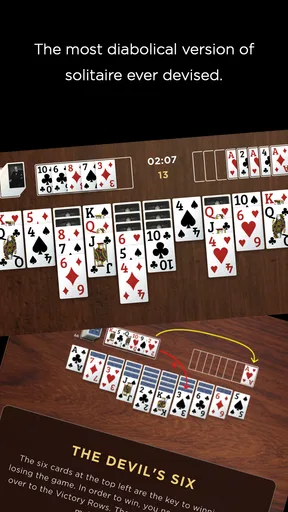
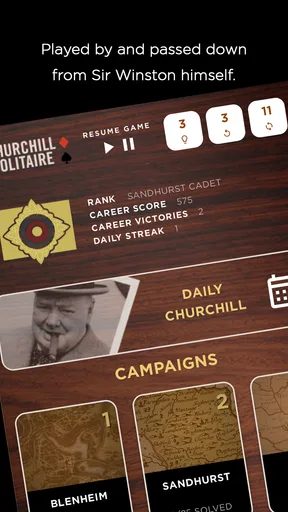
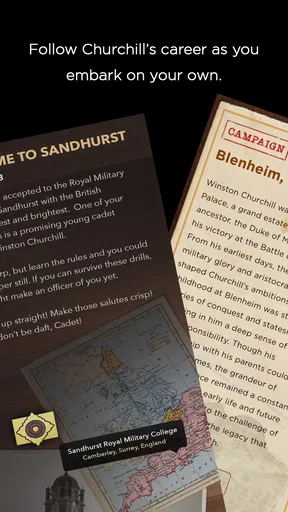
Our Review of Churchill Solitaire Card Game
 Analysis by Appyee
I approached Churchill Solitaire expecting a familiar card game with a historical theme, but it quickly showed itself to be a much tougher kind of solo challenge. This is a free card game from WSC Solitaire, LLC, built around a version of solitaire associated with Winston Churchill. The basic idea is easy to understand, yet the decisions become uncomfortable surprisingly quickly because a safe-looking move can remove the only useful option a few turns later.
That tension is the main reason I kept playing. It is not the sort of solitaire I open only to switch off my brain completely. I have to watch the layout, preserve useful cards, and accept that not every attractive move is actually good. The game is available for everyone aged ten and up, and it works on Android devices running version 6.0 or later. With a 3.5 average from around 2.1 thousand ratings and more than 10 thousand installs, it has found a modest but clearly interested audience.
How Churchill Solitaire feels in everyday play
I find that everyday sessions work best when I treat each board as a small planning exercise rather than a race to move cards. That mindset makes it easier to notice which choices preserve options and which merely look satisfying in the moment. Before settling into that routine, I’d check the available settings and controls so the layout feels comfortable on my device.
A familiar format with a sharper edge
The biggest adjustment is realizing that this is not simply a standard solitaire layout with a Churchill skin. The game presents a more demanding puzzle, where planning matters more than quickly clearing obvious cards. In ordinary solitaire, I can often make several moves automatically and only start thinking when the board becomes awkward. Here, that habit gets punished. I have to consider what a move exposes, which cards might become blocked, and whether I am spending a useful sequence too early.
That makes each round feel closer to a compact strategy puzzle than a relaxing card shuffle. The cards are still recognizable, so the learning curve is not intimidating, but the decisions have more weight. I found myself pausing before moves that would normally feel automatic. That pause is where the game earns its identity: the challenge comes from managing limited opportunities rather than simply matching cards in a familiar order.
Why the difficulty can be satisfying
I like games that give me a clear reason to replay a failed attempt, and this one does that well. Losing does not always feel random. Often, I can identify the moment when I revealed the wrong card, used a sequence without considering the remaining layout, or chose immediate progress over future flexibility. That sense of responsibility makes another attempt feel worthwhile.
The best way to play is to treat every move as part of a longer chain. Before moving a card, I look for three things: what the move reveals, what it blocks, and whether it changes my access to cards that are currently difficult to reach. This small routine is more useful than playing quickly. It also gives the game a stronger mental rhythm than ordinary casual solitaire.
A realistic short-session use case
I can see this working particularly well during a short break when I want something more involving than scrolling but less demanding than a full action game. A round can become a self-contained concentration exercise: I start with a few minutes available, make a handful of careful decisions, and either finish or leave the board knowing exactly where I got stuck.
It is also a reasonable choice for people who enjoy card puzzles but do not want an opponent, a timer-driven match, or a social system. I would use it while waiting for an appointment or during a quiet commute, provided I had enough attention to think through the layout. If I were tired and wanted purely automatic relaxation, I would choose a simpler solitaire variant instead.
The interface matters more than expected
With a card game, presentation can either support concentration or get in the way. Here, the important test is whether I can read the cards quickly and understand the consequences of a move without fighting the controls. The game’s appeal depends on keeping attention on the puzzle, not on decorative distractions.
That also means device size can affect comfort. On a smaller phone, a complex layout naturally asks for more visual checking, especially when several cards are partially covered. I would recommend trying it on the device you intend to use rather than assuming that every screen will feel equally comfortable. A larger display can make planning easier, while a compact phone is more convenient for quick sessions.
What the current release tells me
The current version is 2.3.09, and the game has been available since June 20, 2016. That combination suggests a product with a long history rather than a brand-new experiment. I see that as a positive when judging the core concept: the unusual rules have had time to establish their own identity, and the game is not relying solely on a launch novelty.
At the same time, an older release history changes what I expect from it. I am more interested in whether the current build remains dependable and readable than in whether it delivers the newest visual trends. The version number shows that the app has gone through revisions, but it does not by itself tell me that every modern convenience has been added. I would judge it primarily as a focused card puzzle, not as a constantly expanding platform.
How updates affect returning players
For an existing player, the most important question is whether the current version preserves the central challenge while making the experience easier to use. That is the kind of evolution I value here. A solitaire game should not change its character so much that learned strategies become irrelevant, but it should remain comfortable enough that returning users can concentrate on decisions instead of interface friction.
New players should not feel pressured to understand every possibility immediately. My advice is to spend the first few rounds learning how the layout behaves rather than chasing fast wins. Returning players, meanwhile, may benefit from deliberately changing their habits. If I have been making the same opening moves on autopilot, a difficult board is often a sign that I need to reconsider my sequence, not simply play faster.
Small habits that improve the experience
One useful habit is to delay a move that creates immediate visual progress until I have checked whether it opens a better route elsewhere. Clearing a card can feel rewarding, but an empty space or exposed card is only valuable if it gives me meaningful access. I try to distinguish between movement that looks productive and movement that actually increases future choices.
Another practical tip is to scan the whole layout before touching the most obvious card. I look for cards that are buried, isolated, or likely to become inaccessible. This prevents me from spending a flexible move on a card that was already easy to reach. It also makes losses more informative because I can trace them back to a planning decision.
A third tip is to use a failed round as a review rather than instantly restarting without thought. I ask myself whether the problem came from an early commitment, a missed reveal, or poor ordering. That approach turns repetition into practice. It is especially useful because the game’s difficulty is not solved by reflexes; improvement comes from recognizing patterns in my own choices.
Where it differs from ordinary solitaire
Compared with classic solitaire, this game is less forgiving of passive play. Traditional versions often let me settle into a familiar routine, while Churchill Solitaire asks me to think about the board as a network of future possibilities. That makes it more interesting for players who have become bored with predictable card movement.
The trade-off is that it may feel unfair to someone who expects every round to be comfortably winnable through careful but straightforward play. The unusual rule set creates a steeper mental demand, and the historical framing does not remove that demand. If my priority is a calm, instantly understandable card game, a conventional solitaire app is probably the better choice.
It also differs from competitive card games because there is no need to read an opponent, manage a hand against another person, or wait for a match. The pressure comes entirely from the puzzle in front of me. That makes it private and convenient, but it also means players who need social interaction or changing human behavior may find the experience solitary in the literal sense.
Who should play it
I would recommend it to people who already enjoy solitaire but want more planning, especially players who like replaying a board to understand their mistakes. It is a good fit for patient users who enjoy making a careful move, waiting to see its consequences, and trying again with a better plan.
It can also suit fans of historical themes who want the connection to Churchill to be part of the game’s personality rather than a separate reading experience. The concept gives the card puzzle a distinctive identity, even though the main attraction remains the challenge of the play itself.
I would be more cautious recommending it to children near the lower end of the age range without guidance, not because the card format is difficult to recognize, but because the strategic frustration may be stronger than expected. The Everyone 10+ rating is a useful signal for families deciding whether the tone and challenge fit their player.
Who may want something else
Players looking for a gentle way to pass time should probably begin with a classic solitaire game. Churchill Solitaire demands attention at exactly the moments when a casual player may want to stop thinking. It is also not my first choice for someone who wants a broad collection of card games in one place; this is a focused experience built around one distinctive interpretation.
I would also skip it if my main goal were competition, social play, or a strong sense of progression outside the puzzle itself. The game’s value comes from learning its logic and improving my decisions. If that loop does not sound appealing, additional attempts may feel like repetition rather than mastery.
Free to start, with a purchase decision to consider
The game is free to download, which makes it easy to test the rules before deciding whether the style suits me. Optional purchases range from $0.99 to $29.99 per item. I would treat that as a reason to play for a while before buying anything, especially because the core question is not whether the cards look attractive but whether I enjoy the particular challenge.
For me, the sensible approach is to evaluate the free experience on its own terms. If I like the decision-making, a purchase may feel reasonable depending on what is offered in the version I use. If I do not enjoy the rules, spending money will not solve the underlying mismatch. This is one of those games where personal tolerance for repetition and difficulty matters more than presentation.
What I would watch over time
For future updates, I would pay attention to improvements that make difficult boards easier to read without weakening the challenge. Clear feedback, comfortable card handling, and dependable behavior matter more to me than unnecessary decoration. I would also want the game to preserve its distinctive rules rather than gradually becoming indistinguishable from standard solitaire.
Existing users should watch whether new versions keep their familiar strategies useful while reducing avoidable friction. New users should watch the same thing from another angle: the current build should make the unusual rules understandable enough that failure feels like a lesson instead of a mystery. That balance will determine whether the game remains appealing beyond the first few rounds.
My final recommendation
Churchill Solitaire is a focused card game with a clear personality and a more demanding brainteaser at its center. I appreciate that it does not simply imitate the usual solitaire routine. It asks me to plan ahead, protect future options, and accept that a move that looks good now may create trouble later.
Its limitations are equally clear. The challenge can be frustrating, the format is intentionally solitary, and players wanting a broad card-game collection or effortless relaxation may be happier elsewhere. Still, if you want a free solitaire experience that rewards patience rather than speed, I think it is worth trying. My strongest recommendation is to approach it slowly: learn the layout, review your failed choices, and let the unusual rules become familiar before deciding whether this is the right card game for you.
Verdict
Strengths of Churchill Solitaire Card Game
- Classic solitaire rules are easy to learn and quick to start.
- Challenging layouts provide more depth than standard solitaire.
- Smooth card controls make moving cards comfortable on mobile.
- Games are ideal for short breaks and casual offline play.
- Clear visual design keeps the board easy to follow.
Limitations of Churchill Solitaire Card Game
- Some deals can feel extremely difficult or dependent on luck.
- Hints and undo options may reduce the challenge for purists.
- Ads can interrupt play, especially in the free version.
- The interface may feel dated compared with newer card games.
- Limited variety may make the experience repetitive over time.
Similar Picks in This Category
View All
Solitaire - Classic Card Games
MobilityWare4.6

UNO!™
Mattel163 Limited4.3

Spider Solitaire: Card Games
MobilityWare4.6

Solitaire.com - Classic Cards
Tripledot Studios Limited4.7

Plants vs. Zombies™ Heroes
ELECTRONIC ARTS4.1

Hearthstone
Blizzard Entertainment, Inc.4.1
Frequently Asked Questions
What is Churchill Solitaire Card Game, and how is it different from traditional solitaire?
Churchill Solitaire Card Game is a strategic single-player card game inspired by the version reportedly enjoyed by Winston Churchill. It uses two decks and introduces an additional row of cards, creating more possible moves and a higher level of difficulty than classic Klondike Solitaire. The goal is to clear your cards while carefully managing the special layout and planning several moves ahead.
Is Churchill Solitaire Card Game free to download and play?
The game can generally be downloaded for free, although the exact pricing model may vary between Android and iOS and may change with updates. Depending on the version, optional purchases, advertisements, or premium features may be included. Before downloading, check the store listing for current information about in-app purchases, subscriptions, and whether any features require payment.
Can I play Churchill Solitaire offline?
Churchill Solitaire is primarily a single-player card game, so the main gameplay may be available without a constant internet connection. Offline access can depend on the version installed, while advertisements, cloud synchronization, leaderboards, updates, or in-app purchases may require internet access. It is best to launch the game once while connected before traveling or playing without reliable mobile data.
Is Churchill Solitaire suitable for beginners?
The game is easy to understand if you already know basic solitaire rules, but it is considerably more challenging because of its two-deck format and extra card row. New players may need several attempts to understand which cards to move and when to preserve useful spaces. Tutorials, hints, or undo options can make the learning process less frustrating, depending on the app version.
Does Churchill Solitaire Card Game include hints, undo options, or accessibility features?
Most modern versions of Churchill Solitaire provide helpful tools such as undo controls, hints, statistics, or customizable settings, but the available options can differ by platform and update. These features are useful because a single poorly timed move can limit future choices. Users who need larger cards, clearer contrast, sound controls, or other accessibility settings should review the current store description before installing.
Play our best games!


